The terms sound interchangeable, but they represent different steps. Understanding them makes a transcript and a GPA calculator much easier to check.
Three related terms
- Grade points: the numeric value assigned to a letter grade, such as B+ = 3.33.
- GPA credits or hours: the course weight included in the GPA.
- Quality points: grade points multiplied by GPA credits.
Worked example
| Course | Grade points | Credits | Quality points |
|---|---|---|---|
| Economics | 3.33 | 3 | 9.99 |
| Statistics | 4.00 | 4 | 16.00 |
| Seminar | 3.67 | 1 | 3.67 |
| Total | 8 | 29.66 |
Why do transcript hours differ?
A transcript can display attempted hours, earned hours, and GPA hours. A passing pass/fail course may increase earned hours while adding no quality points and no GPA hours. A failed graded course may add GPA hours without adding earned hours.
Why should you avoid early rounding?
Use the official grade-point precision, calculate all quality points, and round only the final result. The University of Illinois notes that its official transcript GPA is truncated to two decimals rather than rounded, so even the display rule can vary.
Reconcile a transcript total
To check a cumulative record, sum course quality points for the term and compare them with the term total printed by the registrar. Then add earlier quality points only when the transcript uses the same GPA scope. Transfer, institutional, undergraduate, and graduate totals can be maintained separately.
A one-cent difference in a course product can accumulate across many courses, so use the institution's exact plus and minus values instead of a rounded table copied from another school.
Calculator input label
If a calculator asks for "credits," enter the credits that the school includes in GPA, not automatically every earned or attempted credit shown.
Trace one course row all the way to the total
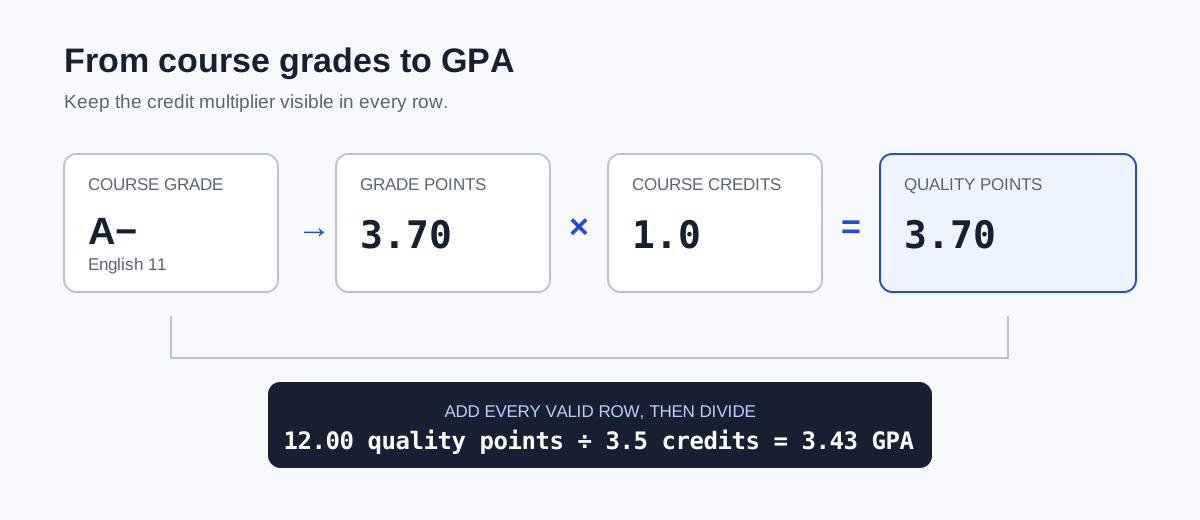
Use a single course to audit the vocabulary. A three-credit course with a B has 3.0 grade points per credit and contributes 9.0 quality points. The transcript may label the denominator GPA hours, attempted hours, or credits, but the numerator still represents grade points multiplied by the hours included under that policy.
Repeat the multiplication for every included course, then add the quality points and GPA hours separately. If a pass/fail course earns credit without entering GPA, it can appear in earned hours while contributing neither GPA hours nor quality points. Keeping those columns separate prevents a graduation-credit total from being used as the GPA denominator.
A four-pass check for this method
A reliable grade points vs quality points estimate should leave an audit trail, not just a final number. Work through these four passes in order and keep the source for every scale, weight, credit value, and inclusion decision beside the calculation.
- Convert the course grade to grade points per credit.
- Multiply grade points by the GPA hours for that course.
- Add quality points and GPA hours in separate totals.
- Divide the totals only after every included row is reconciled.
After the four passes, change one input at a time and calculate again. The direction and size of the change should match the rule you documented. Preserve unrounded values until the final display, label hypothetical inputs, and keep institutional results separate from estimates created for planning. If the worksheet still disagrees with an official record, compare the included courses and denominator before assuming the arithmetic is wrong.
Trace one course from grade symbol through grade points, GPA hours, and quality points. That row should reconcile before it is added to a cumulative total. Save the source date with the worksheet so a later policy change does not silently alter the meaning of the estimate.
Sources
- University of Illinois Registrar: Calculate Your GPA
- University of Illinois Registrar: Grade Point Scale
The high school GPA calculator shows both total quality points and total valid credits, making it useful for checking the distinction in a real course list.