"Ten extra-credit points" is incomplete information. The effect depends on whether those points increase only the numerator, whether they also create a new assignment denominator, and whether a category cap applies.
Bonus points with no new denominator
A student has 430 points out of 500, or 86 percent. Ten pure bonus points produce:
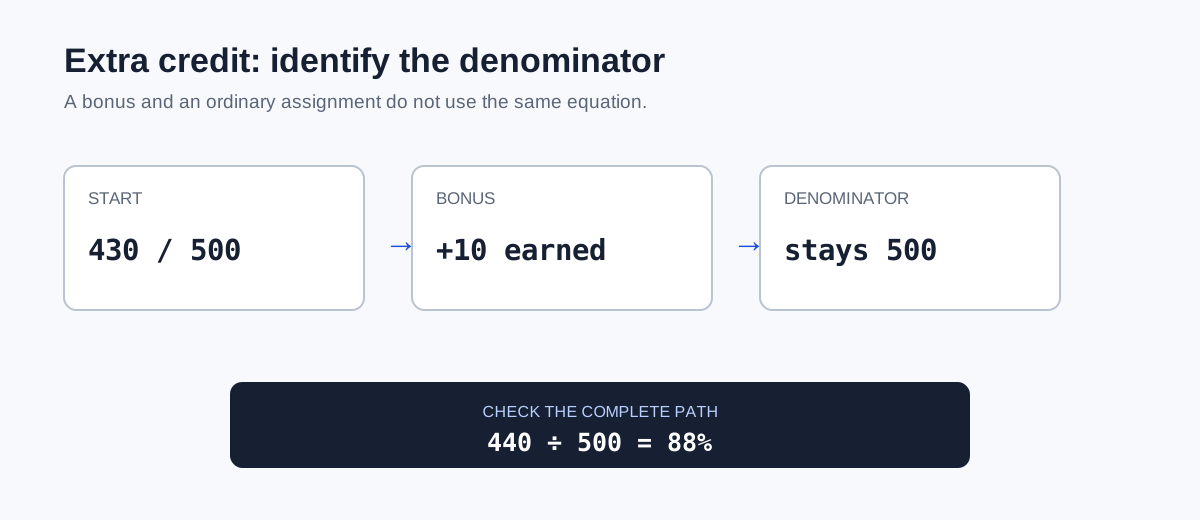
Extra assignment with possible points
If the extra assignment is worth 10 earned points out of 10 possible points, both totals change:
Weighted category extra credit
When extra credit belongs to a category, first update that category average, then apply the category's course weight. A homework bonus inside a 20 percent category does not directly add the same number of points to the final course grade.
Caps and cutoffs
- A category may be capped at 100 percent.
- Bonus points may replace a dropped assignment rather than add to totals.
- Extra credit may be available only after required work is complete.
- The instructor may round after all bonuses are applied.
How much can extra credit change a grade?
Compare the course grade before and after the bonus, not only the number of extra points earned. Ten bonus points raised the points-only example by 2.00 percentage points, while a ten-out-of-ten extra assignment raised it by only 0.27. The same label therefore produced very different outcomes.
For a weighted category, report both the category increase and the final course increase. A five-point rise inside a 20 percent category moves the overall course grade by one point.
Never infer the rule from the gradebook display
Read the syllabus or assignment note. Two gradebooks can display "+10" while using different numerator and denominator behavior.
How should you identify the gradebook model?
Ask where the extra credit enters the gradebook. It may add earned points without increasing possible points, create a new assignment with its own denominator, raise one category average, or apply after the ordinary course grade is calculated. These four models do not produce the same result.
Write a before-and-after equation using the actual rule. For a points course, preserve both earned and possible totals. For a category course, recalculate the affected category first and then multiply by its course weight. If the instructor caps the course at 100 percent or limits bonus points by category, apply that rule only after the ordinary contribution is known.
Keep bonus points out of the wrong denominator
Adding bonus points to both earned and possible points turns a bonus into an ordinary assignment and understates its effect.
If the syllabus treats extra credit inside a category, use the grade calculator with weights and raise only that category score. Keep scores above 100 only when the gradebook uses the same rule.
A four-pass check for this method
A reliable extra credit grade calculation estimate should leave an audit trail, not just a final number. Work through these four passes in order and keep the source for every scale, weight, credit value, and inclusion decision beside the calculation.
- Identify whether the bonus changes earned points, possible points, or a category.
- Rebuild the grade before extra credit using the published method.
- Apply the bonus only at the level where the gradebook places it.
- Compare the before-and-after course percentages and check any cap.
After the four passes, change one input at a time and calculate again. The direction and size of the change should match the rule you documented. Preserve unrounded values until the final display, label hypothetical inputs, and keep institutional results separate from estimates created for planning. If the worksheet still disagrees with an official record, compare the included courses and denominator before assuming the arithmetic is wrong.
Run the ordinary grade and bonus grade side by side. The difference should come from the documented bonus rule, not from accidentally moving points into a new denominator. Save the source date with the worksheet so a later policy change does not silently alter the meaning of the estimate.